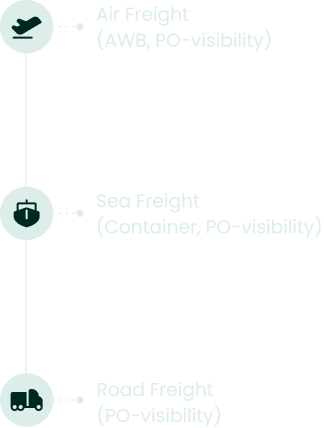
Digital Optima replaces container-number dependency and manual tracking with a purchase-order–centric view of global freight – delivering predictable, proactive control across sea, air, and road shipments.
Common international freight risks include:
Reliance on container numbers or AWBs
To track shipments.
Fragmented visibility
Across carrier, vessel, and freight forwarder portals.
Manual tracking
Of purchase orders and SKUs across systems.
Poor visibility
When purchase orders are split across containers or consolidated into shared shipments.
When Freight Visibility Breaks Risk Multiplies
For cargo owners and supply chain leaders, international freight risk escalates when tracking depends on container numbers, airway bills, and disconnected carrier systems.
When purchase orders, SKUs, and shipment status are spread across multiple portals, teams lose confidence, miss updates, and spend excessive time manually reconciling data – increasing the likelihood of late responses and downstream disruption.
By shifting from container-based tracking to purchase-order–based visibility, organisations achieve measurable improvements in efficiency, planning accuracy, and operational confidence.
Simplified workflows
Purchase-order–based tracking reduces reliance on multiple carrier systems.
Improved planning accuracy
Real-time shipment status updates and alerts improve planning accuracy by up to 30%.
Reduced manual effort
Eliminating container lookups cuts manual tracking effort by up to 40%.
Greater stakeholder confidence
Transparent handling of split and consolidated shipments improves trust and decision-making.